Valorant: What iiTzTimmy's Lowest-to-Highest Rank Challenge Reveals About Climbing
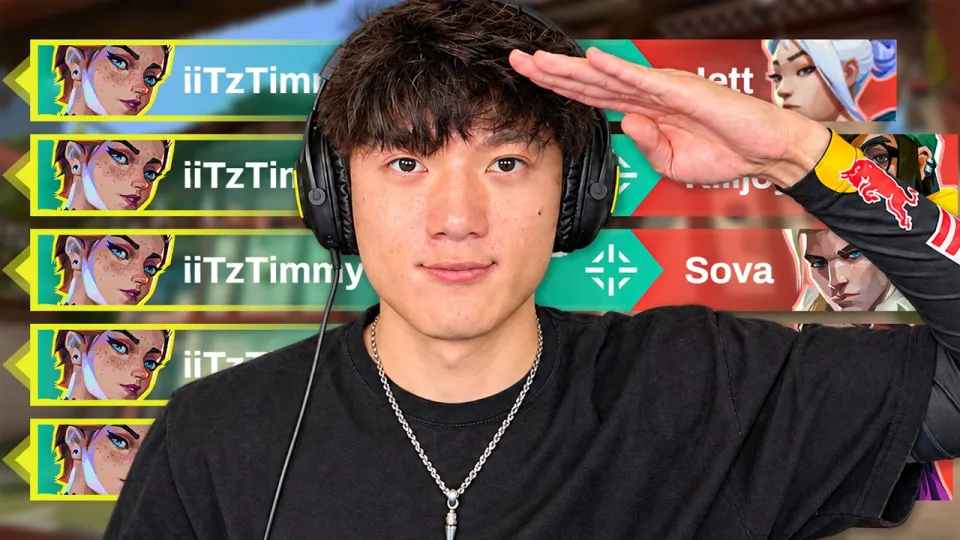
Video: I Might Be Getting TOO Good at Valorant… (Lowest To Highest Rank Challenge)
Need articles like this for your video? They help promote it on YouTube and Google — order them in the Telegram bot @sat_sit_bot. It writes articles around your video, embeds the video and publishes them on popular niche websites (no ads). Free trial — 50 articles.
· based on the channel iiTzTimmy Two
Key takeaways
- iiTzTimmy's Lowest To Highest Rank Challenge runs a fresh account from Iron to Radiant in Valorant.
- The run highlights how mental resilience matters as much as aim in low Elo.
- Cypher players in early games often tilt over missing comms and blame teammates.
- In higher lobbies, opponents recognize the streamer and play more aggressively.
- The challenge doubles as a practical guide to escaping Silver and Gold.
Valorant is a free-to-play 5v5 tactical shooter where rank progression depends on individual performance and team coordination. In his Lowest To Highest Rank Challenge, streamer iiTzTimmy starts from the bottom of the ranked ladder and climbs toward Radiant, showing that the biggest barriers in low Elo are mental and decision-making, not raw aim. You can follow his live climb and ask questions directly on his Twitch channel.
What the Lowest To Highest Rank Challenge actually tests
The challenge removes the safety net of a high-ranked account and forces a player to re-learn the habits that win games at every tier. Starting in Iron and Silver, iiTzTimmy faces lobbies where teammates may not communicate, enemies hold unpredictable angles, and one player's tilt can sink the whole team. The run is less about proving mechanical skill and more about demonstrating how a consistent mindset and smart agent picks translate into wins. Viewers see the same maps and agents they play, but with a clear example of how a top player adapts to chaos rather than fighting it.
Why low Elo is a mental game, not just an aim contest
In low ranks, the most common failure is not missing shots but losing composure after a bad round. A Cypher player in one of the early matches becomes the case study: he pushes first into site, dies, then blames his team for not trading or calling. He also complains about missing comms while making up calls in his own head. That pattern — overextending, then nitpicking teammates — is exactly what keeps players stuck. iiTzTimmy's approach is the opposite: he takes responsibility for his own positioning, uses utility to create advantages, and keeps his comms simple. The lesson for anyone climbing from Iron or Bronze is to review deaths before blaming others.
Agent picks and utility that carry games
Agent selection in the challenge reflects what works at each rank. In lower lobbies, self-sufficient duelists and sentinels who can hold a site alone tend to perform well because teammates may not coordinate. As the climb progresses, the value of information-gathering and crowd control rises. The run shows Reyna players sometimes being the most sensible voices on a team, which surprises viewers who expect duelists to be reckless. The takeaway is not to copy a pro's agent pool but to pick agents whose utility you can use without relying on teammates. For example, Cypher's cages and trips can lock down a site even when comms are silent.
How opponents change as the rank climbs
In the second featured match, opponents are noticeably more aggressive and desperate to make plays, partly because they recognize a famous streamer in the lobby. That recognition cuts both ways: it can make enemies over-peek or chase kills, but it also means they are warmed up and motivated. iiTzTimmy uses that aggression against them by holding angles and letting them come to him. For regular players, the lesson is that opponent behavior shifts with rank — Silver players may hide, while Diamond and Ascendant players will trade and push together. Adjusting your positioning to the lobby's habits is more valuable than forcing the same strategy every game.
Common viewer questions about the climb
Viewers often ask about sensitivity and DPI after watching a high-level player, but the challenge shows that settings matter less than crosshair placement and game sense. Another frequent question is about the fake AFK moment: pretending to be away to bait an enemy is a mind-game tactic that works only when your team is ready to capitalize. Players also wonder why a Radiant-level player sometimes loses rounds in Silver — the answer is that Valorant is a team game, and even a top player cannot win every round when teammates make repeated mistakes. The challenge is a reminder that improvement comes from focusing on your own decisions, not from expecting perfect teammates.
Useful links
- iiTzTimmy on Twitch — live streams and the full rank climb.
- iiTzTimmy on Twitter — updates and clips.
- iiTzTimmy on Instagram — behind-the-scenes content.
- iiTzTimmy on TikTok — short highlights.
- iiTzTimmy Discord — community and LFG.
Final thoughts on climbing Valorant ranks
The Lowest To Highest Rank Challenge is more than a highlight reel; it is a practical demonstration of how mental resilience, agent utility, and adaptive positioning outweigh raw aim in Valorant's ranked ladder. iiTzTimmy's run shows that low Elo players can escape by owning their mistakes and simplifying their comms, while higher ranks demand respect for coordinated aggression. The channel iiTzTimmy Two packages this climb into an accessible breakdown for players at any tier. For a live look at the next stage of the challenge, tune in to iiTzTimmy's Twitch stream.
Source: I Might Be Getting TOO Good at Valorant… (Lowest To Highest Rank Challenge) · Markdown version
Questions & answers
What is the Lowest To Highest Rank Challenge in Valorant?
It is a series where a high-level player starts on a fresh account at the bottom of the ranked ladder and climbs toward Radiant. The challenge tests adaptability, mental strength, and decision-making across different Elo brackets.
Why do low Elo players get stuck even with good aim?
Low Elo games often suffer from poor communication and tilt. Players who overextend and then blame teammates rarely improve. Focusing on your own positioning and using utility effectively matters more than raw aim.
Does sensitivity or DPI matter as much as game sense?
While comfortable settings help, game sense, crosshair placement, and map awareness have a bigger impact on rank. The challenge shows that a top player adapts to any lobby by reading opponents rather than relying on a specific sensitivity.
Why does a Radiant-level player sometimes lose rounds in Silver?
Valorant is a team game, and individual skill cannot always overcome teammates who make repeated mistakes or refuse to communicate. The challenge highlights that even top players face unwinnable rounds in low Elo.