7 Things a 14,782 Hour Solo Brings to Official Rust
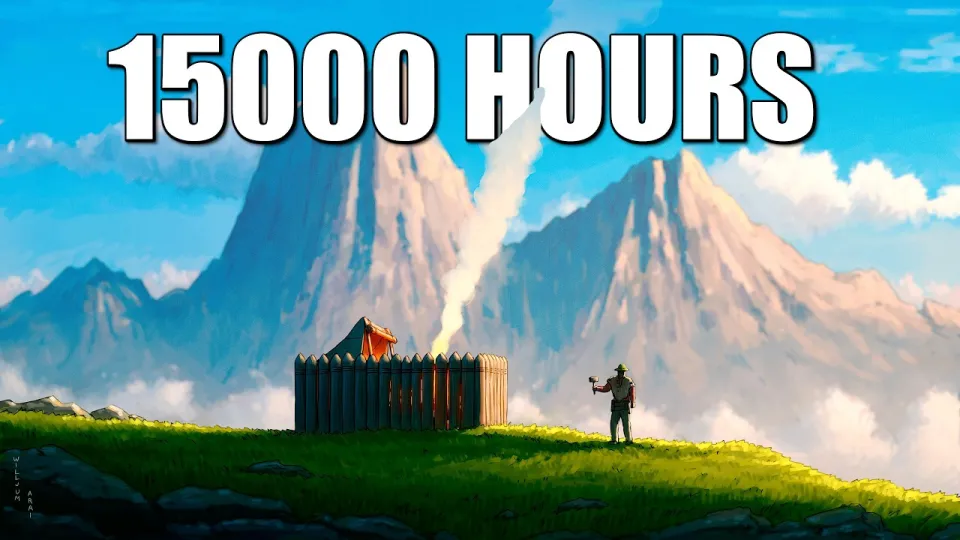
Video: How a solo with 14,782 Hours plays official rust...
Need articles like this for your video? They help promote it on YouTube and Google — order them in the Telegram bot @sat_sit_bot. It writes articles around your video, embeds the video and publishes them on popular niche websites (no ads). Free trial — 50 articles.
· based on the channel Willjum
Key takeaways
- Willjum's account shows 14,782 hours of Rust, roughly 1,180 hours per year since early access in 2013.
- The wipe is played solo on an official server, with a base build credited to the channel Luca.Builds.
- A candle hat is crafted early for light and then never used again, a running joke in the video.
- The run includes a 28th nail gun craft despite a stated preference not to spend scrap on weapons.
- A mannequin placed in a window is used to draw enemy fire away from the player.
Rust rewards time served more than raw aim, and a solo with 14,782 hours plays official servers by converting that time into routine: a fast start, a cheap base, controlled scrap spending and fights only when the odds are chosen. The number itself is the thesis — roughly 1,180 hours a year for over a decade — and the wipe shown is less about mechanical skill than about never wasting a decision. The run is also sponsored by Manscaped's Father's Day offer, which bundles a discount with free shipping using the creator's code.
What 14,782 hours actually means in Rust
The headline figure works out to about 1,180 hours per year if the account dates back to early access, or closer to 1,850 hours per year for someone who started at full release — the equivalent of a part-time job, or nearly a full one, sustained for years. In practice that volume of play produces pattern recognition rather than flashy moves: knowing which monuments get contested at which point of a wipe, how long a furnace takes to finish, when a raid is likely and which fights are simply not worth taking. A solo cannot absorb losses the way a group can, so every hour of experience is spent on risk assessment. The video's framing leans on this: the player describes peaceful farming while the footage keeps showing aggressive, opportunistic PvP, a contradiction viewers pick up on immediately.
The opening hours: candle hat, starter base and first scrap
Early progression on an official server is a race against the first groups to get guns, and the routine here is deliberately unglamorous.
- Get a light source and basic tools fast — the candle hat is crafted for visibility while building, then, by the video's own admission, never used again.
- Put down a small, cheap base near enough to a monument to farm but far enough to avoid being the first door kicked in.
- Convert early scrap into workbenches and blueprints before weapons; the stated preference is not to burn scrap on guns.
- Bank the first metal tools and bow-and-armor kit, which is exactly the loadout that decides most early fights.
The base itself is credited to the builder Luca.Builds, whose designs are popular among solo players for compact footprints and layered access. Placement matters more than size: a modest compound that looks like low value attracts fewer raid attempts than a showpiece.
Scrap discipline versus the 28 nail guns
The most repeated criticism of solo advice is that it collapses the moment a player meets contact. The video invites this directly — the player says he prefers not to spend scrap on weapons, then is shown crafting his 28th nail gun of the wipe. The lesson is not hypocrisy but triage: a nail gun is cheap, disposable pressure that lets a solo finish fights started with a bow, while a proper firearm represents a blueprint investment that a solo cannot easily replace. Spending rules that work for a solo look like this: buy the workbench tier first, buy the tools that generate income, buy weapons last, and treat every cheap craft as ammunition rather than an investment. That is how a player with thousands of hours keeps a wipe running for days instead of hours.
PvP decisions a solo has to get right
A solo's advantage is information, not firepower. The habits visible in a long official run include listening for footsteps at extreme range while somehow missing a bear directly behind — the kind of inconsistency that makes even veteran play relatable — and using the environment as a decoy. A mannequin placed in a window draws fire and reveals an attacker's position, which is cheaper than any armor. Beyond that, the rules are simple and unforgiving: engage when the opponent is already fighting someone else, disengage when a second party can hear the shots, and never chase a wounded player into a base you have not scouted. The video's own framing of a fight as requiring no special PvP skill is generous; the decision to jump two crossbow players is exactly the kind of judgement that only comes from repetition.
Typical questions from viewers of the run
Viewers consistently raise three doubts about a video like this. First, whether the hour count is real — a large share of logged time in Rust is spent logged in while away from the keyboard, and idle hours inflate any profile. Second, whether the playstyle is transferable: a vanilla server with a thousand players on wipe day punishes the same opening that works on a quieter official server, and newcomers report being camped at their starter base within the first hour. Third, whether the calm tone matches the gameplay, since the farming narrative sits alongside repeated aggressive engagements. The honest answer to all three is that experience compresses failure: a veteran loses the same fights but recovers from them faster, and the video edits out the downtime that makes that recovery possible.
Links from the video
- Manscaped Father's Day offer: https://manscaped.com/willjum
- Willjum on Patreon: https://www.patreon.com/Willjum
- Willjum on Twitch: https://www.twitch.tv/willjum
- Willjum on Twitter: https://twitter.com/willjum1
- Music licensing (Creative Commons Attribution 4.0): http://creativecommons.org/licenses/by/4.0/
Conclusion
Fourteen thousand hours in Rust does not produce a player who wins every fight; it produces one who loses fewer wipes to avoidable mistakes — a cheap base, disciplined scrap, chosen engagements and fast recovery after a death. The value of watching a solo official run is in the ordinary decisions: where the door goes, when the nail gun comes out, when the fight is declined. Willjum's breakdown is a long-form look at exactly that rhythm, and the Manscaped Father's Day promotion linked at the Manscaped site is the sponsor that makes the format possible.
Source: How a solo with 14,782 Hours plays official rust... · Markdown version
Questions & answers
Is 14,782 hours of Rust even possible?
Yes, but it implies sustained play over many years: about 1,180 hours annually since early access began, or roughly 1,850 hours per year for an account started at full release. Part of that total is commonly logged-in idle time rather than active play, so the number overstates hands-on hours somewhat.
Can a new player copy this solo official strategy?
The structure transfers — small base near a monument, scrap into workbenches and tools before guns, fights only on your terms — but the timing does not. High-population vanilla servers on wipe day are far harsher than a quieter official server, and new players are routinely camped at their starter base within the first hour.
Why does the player say he avoids spending scrap on weapons and then craft so many nail guns?
A nail gun is a cheap, replaceable tool for finishing fights started with a bow, not a blueprint investment. The rule is about priorities: workbench tier and income tools first, firearms last, with disposable pressure weapons treated as consumables.
What is the mannequin in the window for?
It is a decoy. A silhouette in a window draws fire and reveals an attacker's position and angle, which costs almost nothing and can decide an engagement before it starts — a standard trick for solos who cannot rely on numbers.